

Forbes | 5 Human Skills AI Can’t Replace — And How Schools Can Teach Them

Vince: The overarching theme is to not fear AI but embrace it as human skills, such as creative and critical thinking, can only be enhanced by AI. It is these "human skills" that will never be replaced by AI, and might I add are the skills that should be emphasized by schools throughout the curriculum. Share a Kudos to Vince when you see him for sharing his insights on this!
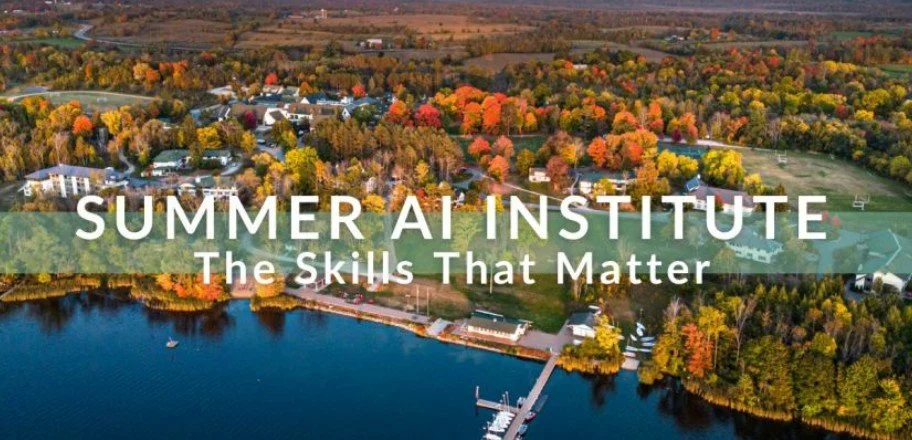
The LCS Summer AI Institute 2026
Lakefield College School is hosting an excellent AI-PD opportunity on their campus from Tuesday, June 23 to Friday, June 26. Please let Adnan know if you’re interested in this.
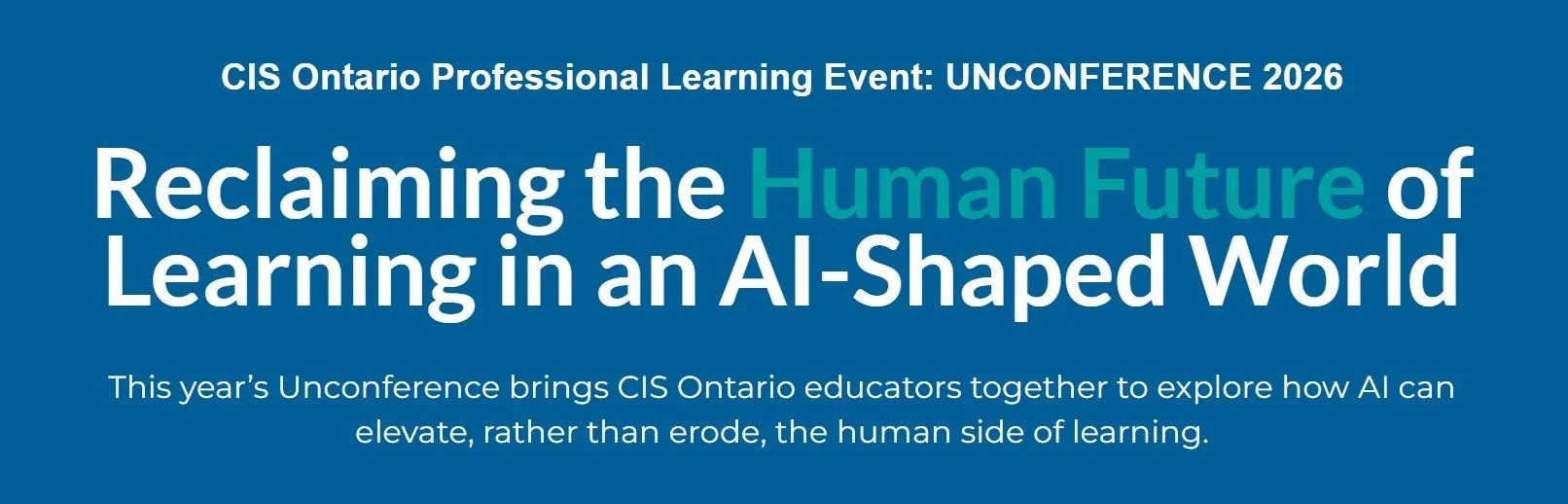
UNCONFERENCE 2026
This gathering of CIS schools had three informative presentations. I encourage everyone to check out the slides and bookmark them:
1. Start Here: Making AI Work for You in the Classroom
2. Generative Learning: Building a Coherent School-Wide Approach
3. Re-imagining Assessment FOR / AS / OF Learning for the AI Age

Free Access to Coursera for AI PD

Interested in taking mini-courses on “AI for Educators” that cover both hands-on skills and the ethical issues surrounding AI on your time? We have free access to wide ranging courses on “Coursera for University of Toronto”.
If you see Andrew Masse in the hallway, give him a KUDOS – he made a video and a corresponding list of things that shows how to use your U of Toronto email address to access.
The only 'sticky' part, once the user verifies their @utoronto.ca account, is that they navigate NOT to the general coursera site, but to the specific UTor Coursera URL:
Forbes | 5 Human Skills AI Can’t Replace — And How Schools Can Teach Them
Vince: The overarching theme is to not fear AI but embrace it as human skills such as creative and critical thinking can only be enhanced by AI. It is these "human skills" that will never be replaced by A I and might I add are the skills that should be emphasized by schools throughout the curriculum.

United Global Education Network (UGEN)

Kudos to Richard for involving teachers at the last UGEN meeting. The theme was:
How do we - as teaching practitioners - realize the potential and tame challenges of Artificial Intelligence in our everyday teaching? The general goal is to learn from each other`s experiences with AI.
Drawing on educators from at least 10 different countries (including Spain, U.S., Croatia, France, Germany, India, Argentina, and Egypt), the presentations and breakout sessions showed how schools around the world are navigating the AI landscape – some similarly and some differently. It was an insightful gathering of educators helping each other out.
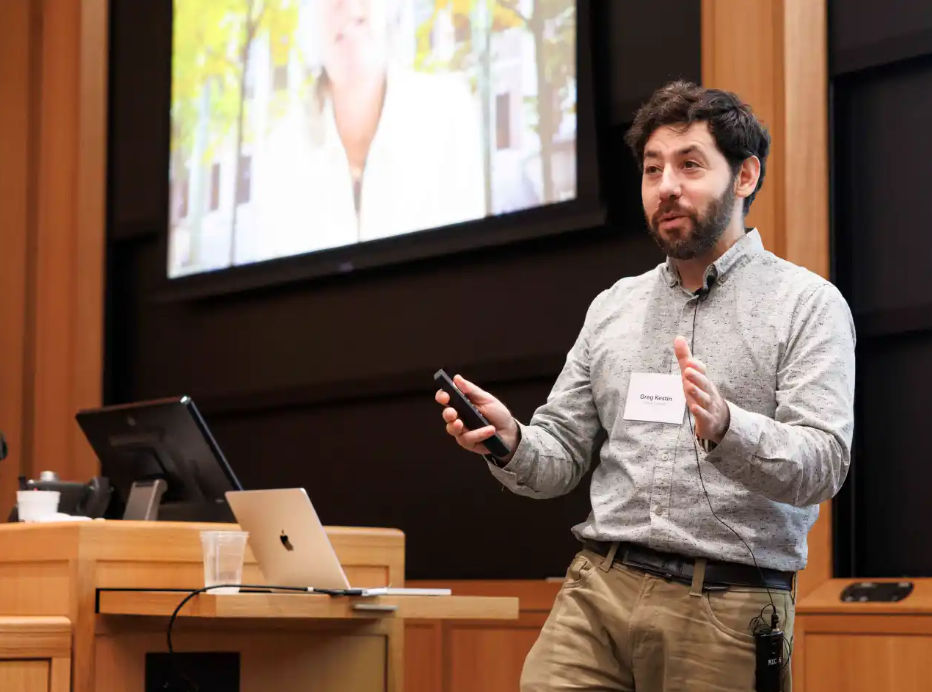
The Harvard Gazette | What if AI could help students learn, not just do assignments for them?
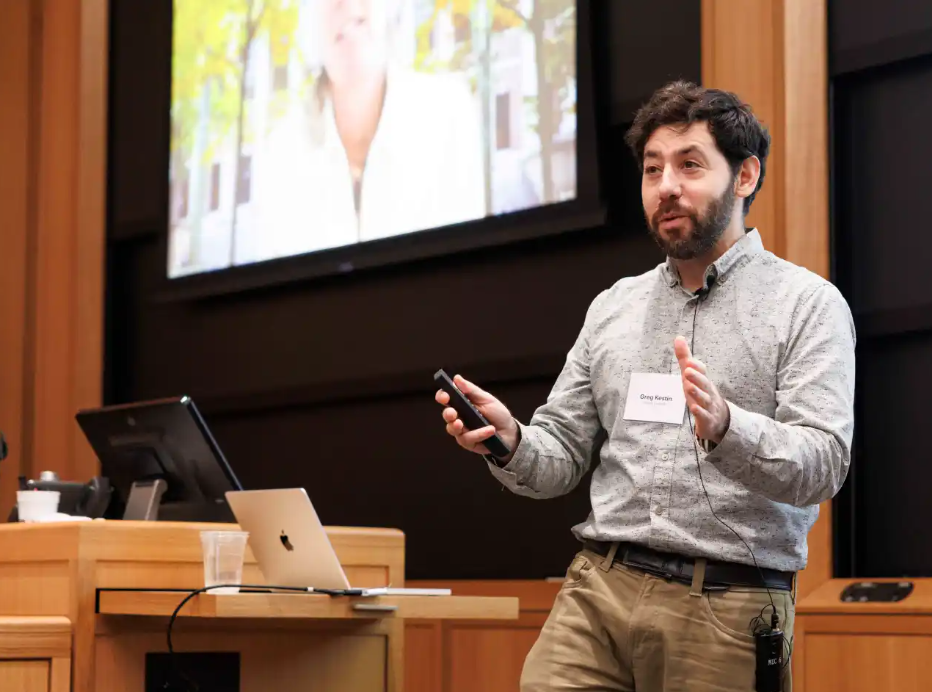
Greg Kestin. Photo by Niles Singer/Harvard Staff Photographer
Click to read.
Professors find promise in ‘tutor bots’ that offer more flexible, individual, interactive attention in addition to live teaching: “...students in the AI-supported classroom reported significantly better engagement with the course and more motivation to learn…with an AI tutor, she added, students can go at their own pace and ask as many questions as they like, any time they like — without fear of being judged. And that’s the most important aspect of the tutor bot, the researchers said — to make sure it prompts students to think and ask questions, rather than do the thinking for them.”

The Atlantic | Colleges Are Preparing to Self-Lobotomize

Illustration by The Atlantic. Source: Bettmann / Getty.
The skills that students will need in an age of automation are precisely those that are eroded by inserting AI into the educational process.
Kudos to Mita for sharing this article which connects well with the MIT study referred by James Campbell on the cognitive dept when using AI for writing tasks in the previous AI BEAT. This article is helpful as it mentions advances on how to mitigate some of these effects. The author draws attention to the larger issue they are observing: "...the current push to integrate AI into all aspects of curricula is proceeding without proper attention to these safeguards, or sufficient research into AI’s impact on most fields of study."

CIS | Unconference 2026

CIS | UNCONFERENCE 2026 - February 9, 2026 @ Centennial College Event Centre in Scarborough
This year’s Unconference brings CIS Ontario educators together to explore how AI can elevate, rather than erode, the human side of learning. Secure your spot. It’d be great to get a group of UTS teachers to attend this.

AI Lunch Workshop for Teachers
On Thursday, November 13th in L135, come on out to hear and chat with colleagues on their latest adventures with AI in the classroom. There will be short hands-on presentations by Shawn Brooks, Joshua Curk and Adnan Zuberi. Bring a laptop! Pizza will be provided.

JCAM’s thoughts on MIT AI research
James Campbell: In this MIT study they monitored (through EEG monitors) the neural engagement of groups of students in essay writing tasks. Some were allowed to use AI LLM's (large language models like ChatGPT), some were only allowed to use a search engine, some were "brain only" and others were asked to move from one mode to another. The study found that "cognitive activity scaled down in relation to external tool use" and that "LLM users consistently underperformed at neural, linguistic, and behavioral levels" over the course of the 4 month study.

LEVR’s thoughts NY Times article
Rebecca Levere: Some sobering advice from the Vice Provost at NYU responsible for helping faculty and students adapt to digital tools. A couple of passages that stood out to me:
“Our A.I. strategy had assumed that encouraging engaged uses of A.I. — telling students they could use software like ChatGPT to generate practice tests to quiz themselves, explore new ideas or solicit feedback — would persuade students to forgo the lazy uses. It did not.
We cannot simply redesign our assignments to prevent lazy A.I. use. (We’ve tried.) If you ask students to use A.I. but critique what it spits out, they can generate the critique with A.I. If you give them A.I. tutors trained only to guide them, they can still use tools that just supply the answers. And detectors are too prone to false accusations of cheating and too poor at catching lightly edited output for professors to rely on them.”
(And tldr: The ‘hated but only real solution’ to the AI cheating crisis: have students write or speak in front of you, without tech.)

explorAItion!
For Ontario CIS/CAIS teachers learning AI
Led by Cal Armstrong (Appley College)
Tuesday, December 2

PD Opportunity: Open AI Academy
ChatGPT Foundations - Getting Started with AI
November 13, 12:00 PM, EST
Kudos to AMDT for suggesting this

Stanford University’s Generative AI for Education Hub Research Study Repository
Unsure if your use of GenAI is backed by the peer-reviewed literature? Why not test your lesson idea against 700 vetted papers in the Research Study Repository of Stanford University’s Generative AI for Education Hub. Go to ChatGPT and enter a prompt along the lines of “...our school is struggling with middle school math outcomes. What does the Research Study Repository at Stanford’s GenAI in Education Hub’s say around GenAI tools that teachers can use to enhance numeracy skills among middle school students?”.